Hrubá Skála

The village of Hrubá Skála is situated close to Turnov. It bears the same name as the nearby castle. The first written record of the municipality dates back to 1360. It consists of eight villages that lie relatively far apart. They are called: Bohuslav, Borek, Doubravice, Hnanice, Hrubá Skála, Krčkovice, Rokytnice and Želejov. The Hrubá Skála municipal office is located in the Řezníček Villa, a listed heritage site.
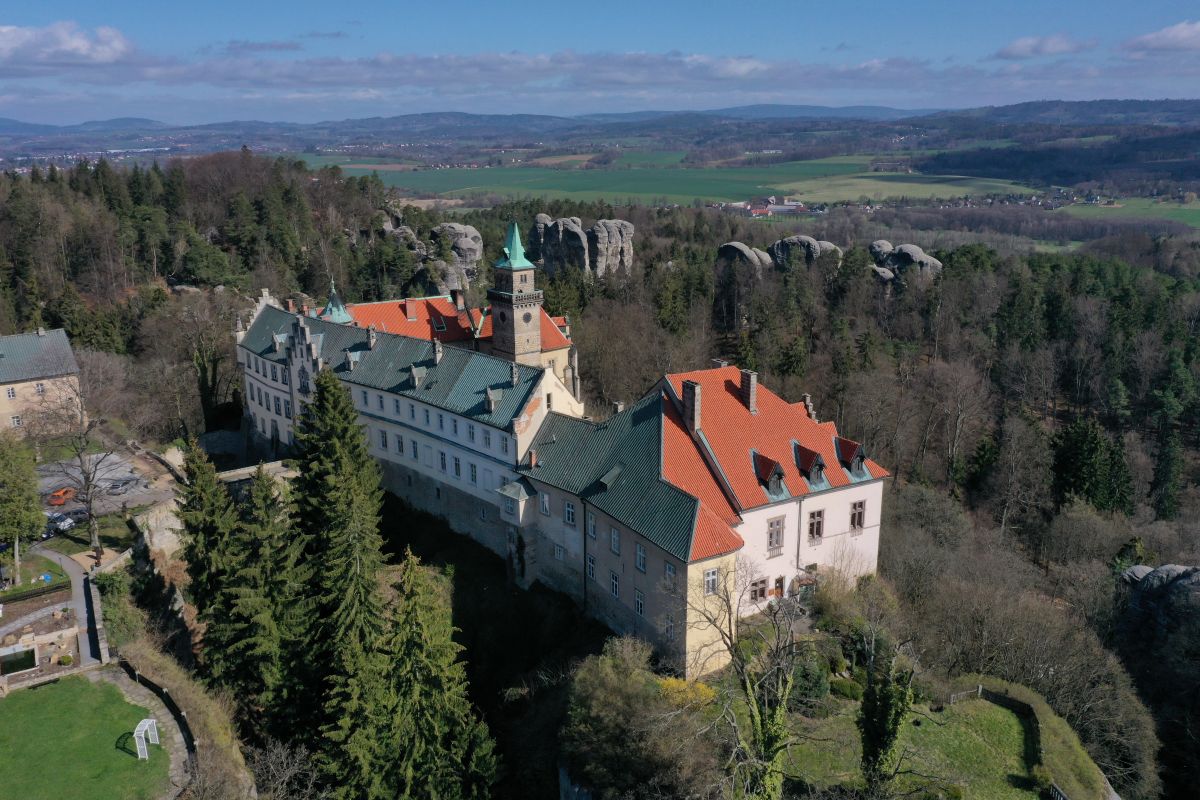
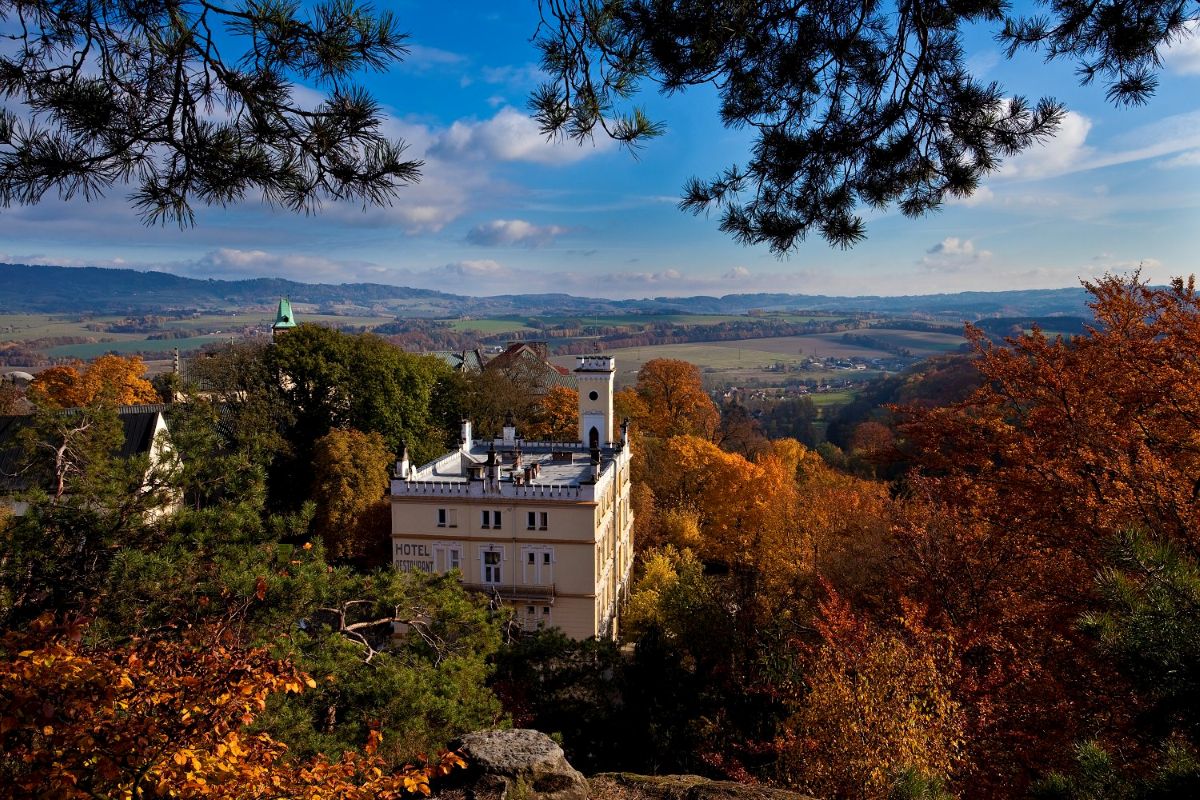
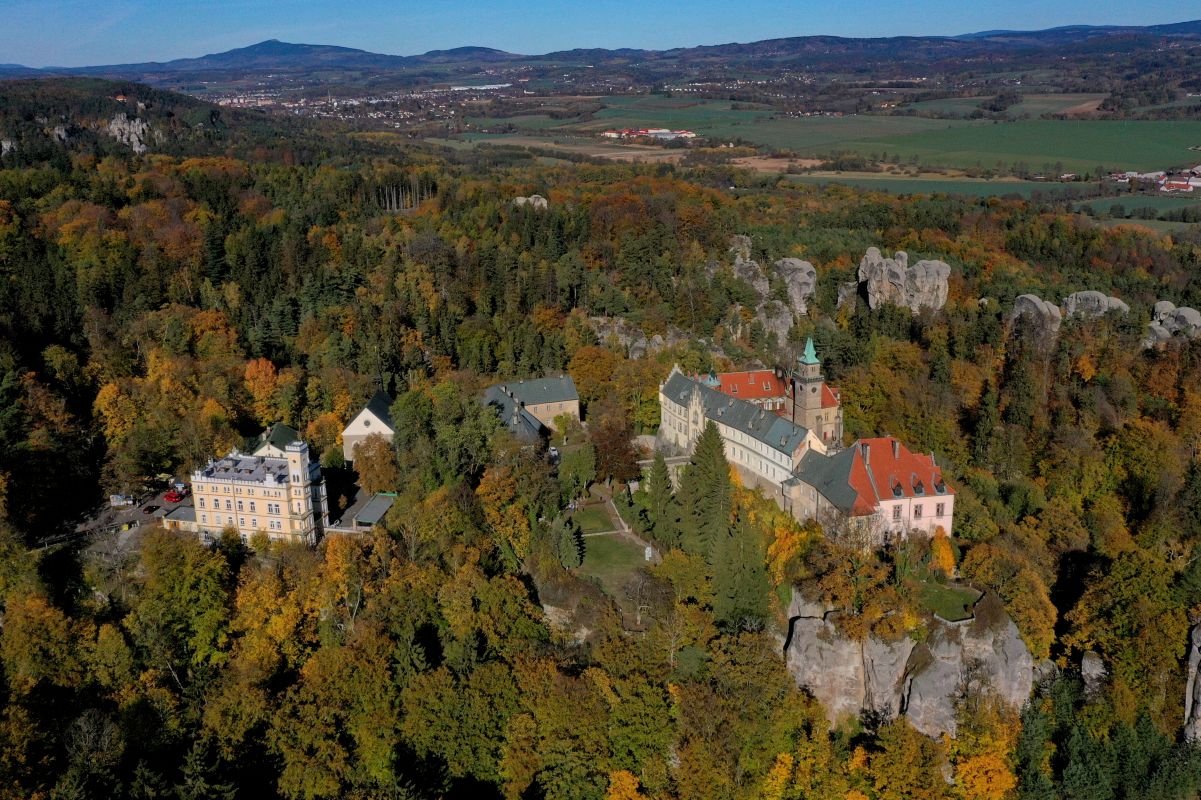
Standing on a spur of rock in the woods above the municipality is the chateau of Hrubá Skála. It was built in the mid-14th century by Hynek of Valdštejn and was later owned by several notable noble families over the centuries. The chateau is now used as a hotel, but its courtyard with its beautiful views is open to the public. There is a lovely path leading from the village to the chateau, winding upwards past the former brewery and several of the chateau’s outbuildings.
There is no industry in the municipality; visitors are mostly attracted by the gorgeous scenery of the Bohemian Paradise, the beautiful countryside along the middle reaches of the Jizera River, which acquired its name back in 1886. The area around here is full of rock towns, romantic valleys, castles, chateaus and picturesque folk architecture. The Hrubá Skála rock town around the village is one of the region’s symbols. Another is the nearby ruined castle of Trosky. Kozákov is the guardian mountain of the Bohemian Paradise.
Link to Hrubá Skála official website: Hrubá Skála – obec v srdci Českého ráje.
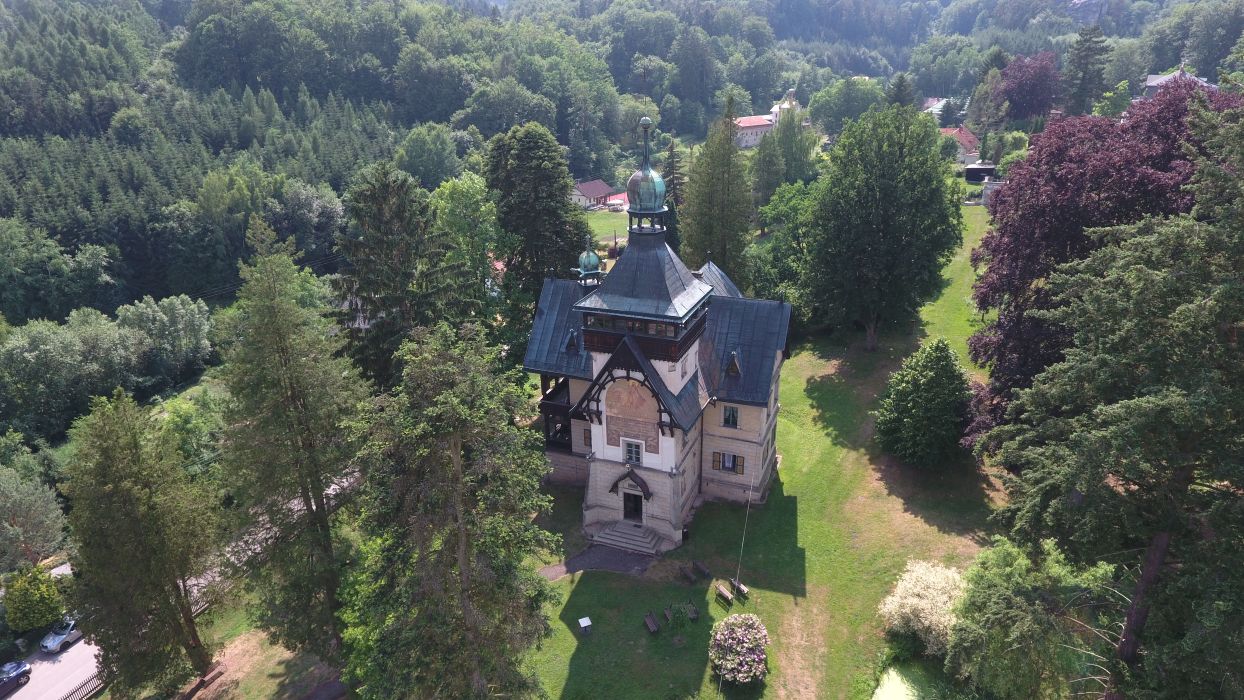
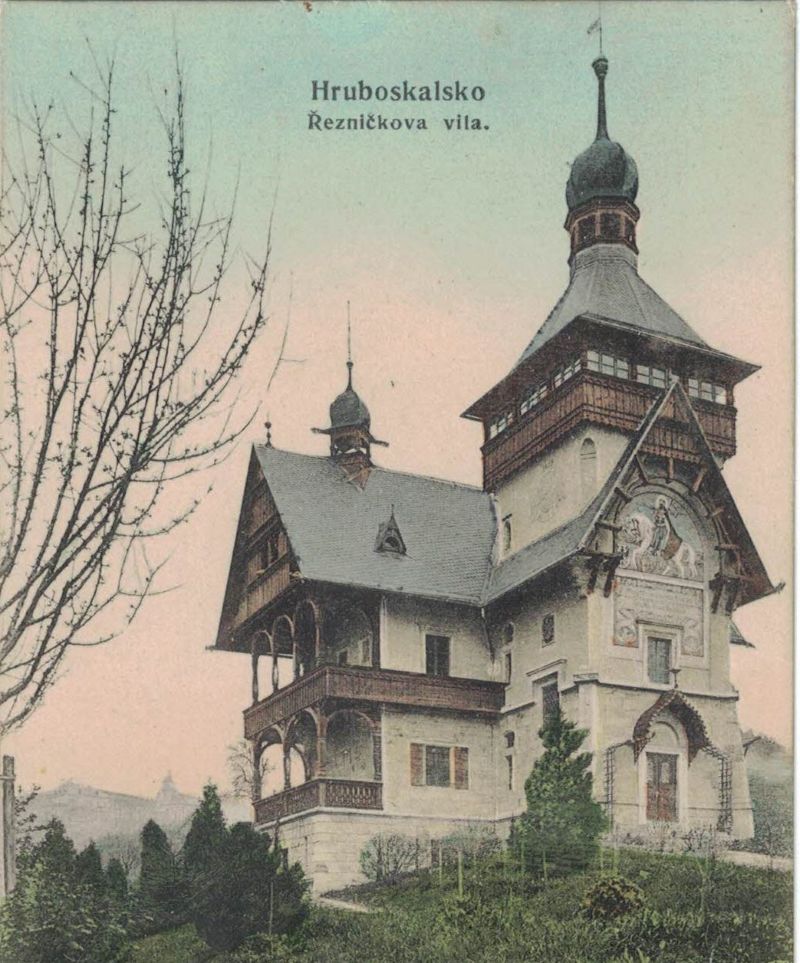
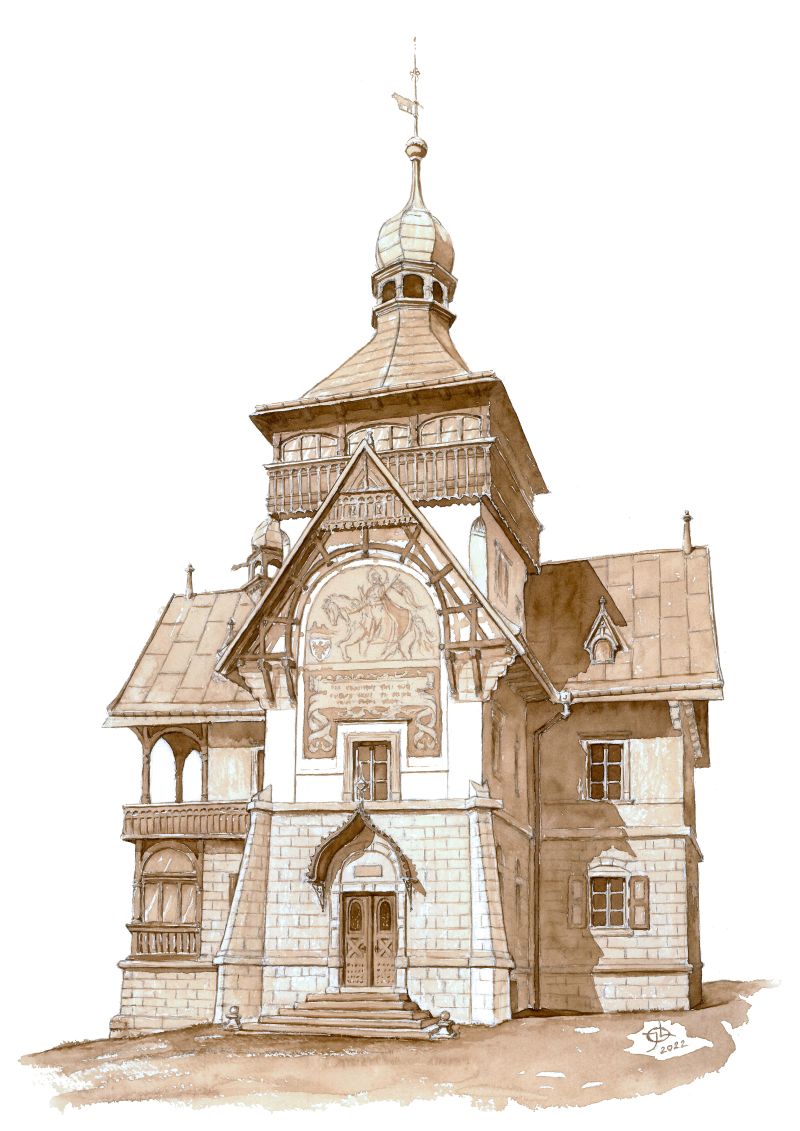
Řezníček Villa
An interesting piece of architecture, the villa of the owner of the Hrubá Skála brewery, Karel Řezníček, was built in 1901 according to plans drawn up by the leading architect Jan Vejrych.
The villa, in the south-eastern part of the park-like garden, is laid out in the shape of an irregular cross. There are abundant elements of folk architecture on the individual facades – porches, verandas, gables and window shutters. Above the main entrance there are frescoes featuring the motif of the Czech patron saint St. Wenceslas on horseback, while there is a sundial and a brewer’s emblem on the south side. The eastern facade of the building is topped by a tower with a wooden walkway, offering a picturesque view of the countryside. The pitched roofs of the villa were originally covered with Železný Brod slate.
The villa comprises a basement, two residential floors and an attic with a bedroom, chambers and a loft. The individual floors are connected by an elliptical staircase leading to the entrance level porch as not to disturb the building's residents.
The villa’s interiors are in a style consistent with the building as a whole. The building costs of the villa amounted to 16 000 gold pieces.
In 1948, after the communist coup, several rooms were taken over by the national committee; the entire villa was nationalised in 1959 and the family was forced to leave. In 1992 it was returned to the descendants of the original owners and six years later was bought by the famous Turnov patron Bohuslav Horáček, who donated it to the municipality of Hrubá Skála.
The building is registered as a monument in the Central List of Cultural Monuments of the Czech Republic (no. 01602553).