Líšný

The village first appears in written records in 1382 under the name Lesczne as property of the Dominican monastery in Turnov. The first dwellings were built on the right bank of the Jizera River, and it was not until the 15th century that the settlement expanded to its left bank.
After the destruction of the Turnov monastery by the Hussites in 1424, the settlement on the right bank (now Líšný Part 1) became part of the Maloskalsko estate, and the settlement on the left bank (now Líšný Part 2), together with the settlement of Libentýn (now Libentiny), became part of the Hruborohozec estate. For a long time, the Jizera River thus divided the two settlements not only geographically and in terms of ownership, but also administratively. The settlements on the left bank formed an independent municipality in 1925; the merger with the right bank to form a single municipality did not occur until 1954.
The flat terrain covering approximately 17 hectares on the left bank offered business opportunities even in the past—for example, the local nobility built a 1-kilometer-long canal from the Jizera River to power an iron hammer mill and a mill with an adjacent pond. However, the pond was drained in 1774, and a century later, the mill ceased to exist as well. In 1874, a paper mill was built in Líšný, but it burned down in 1902. In its place, the industrialist Menšík built a spinning mill in 1903. In 1956, following necessary renovations, glass and costume jewelry production began there, providing employment for many locals until recently.
The first bridge across the Jizera River—which forms a 3.6-kilometer-long border of the village and, as it heads north, resembles a parabolic arch with its apex at the mouth of the Mukařov Stream—was built in 1875.
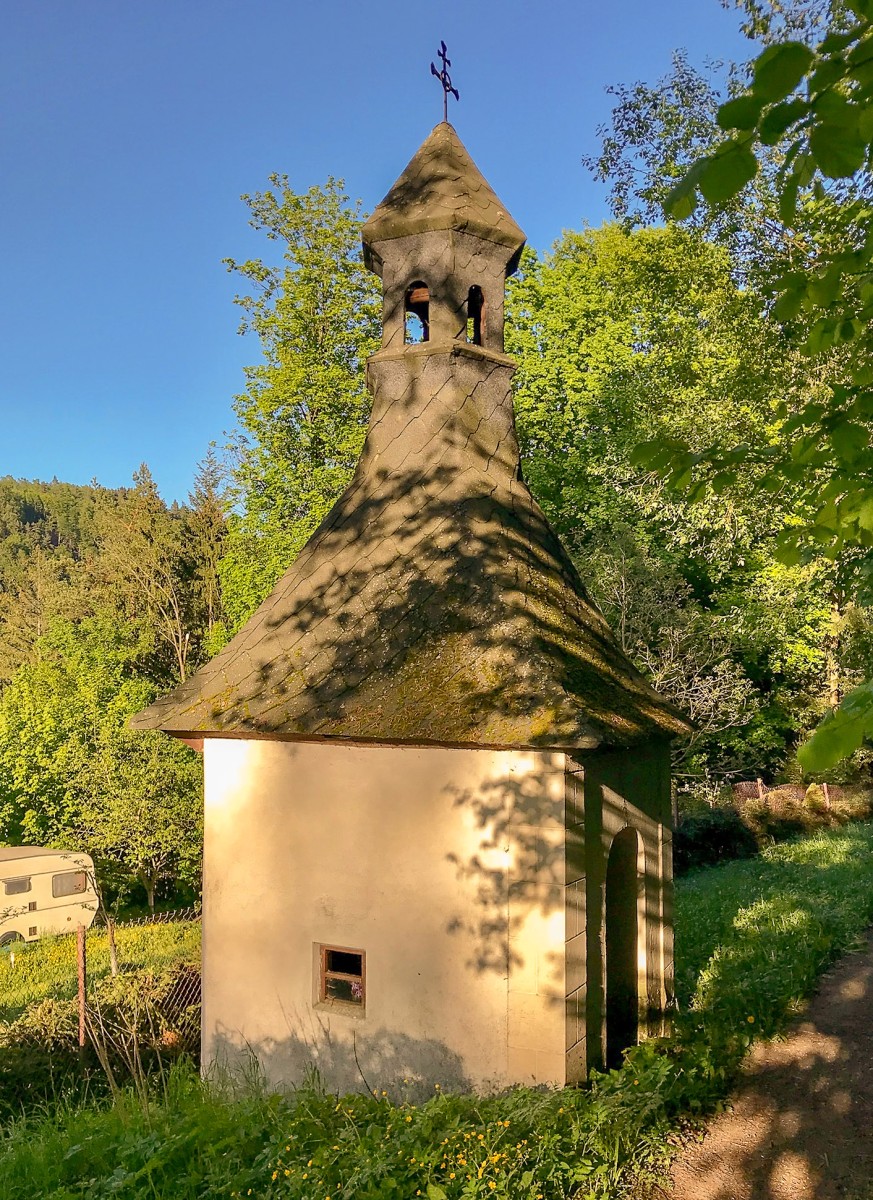
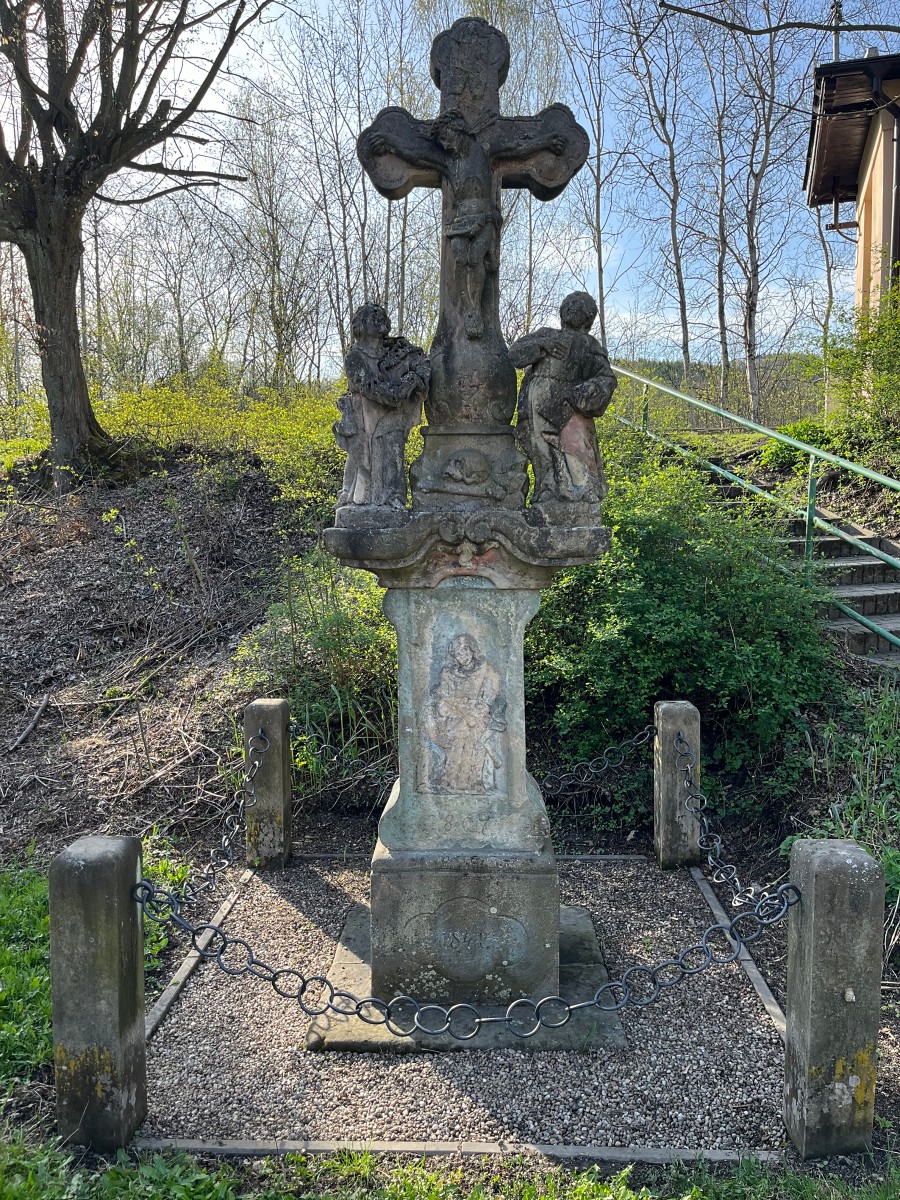
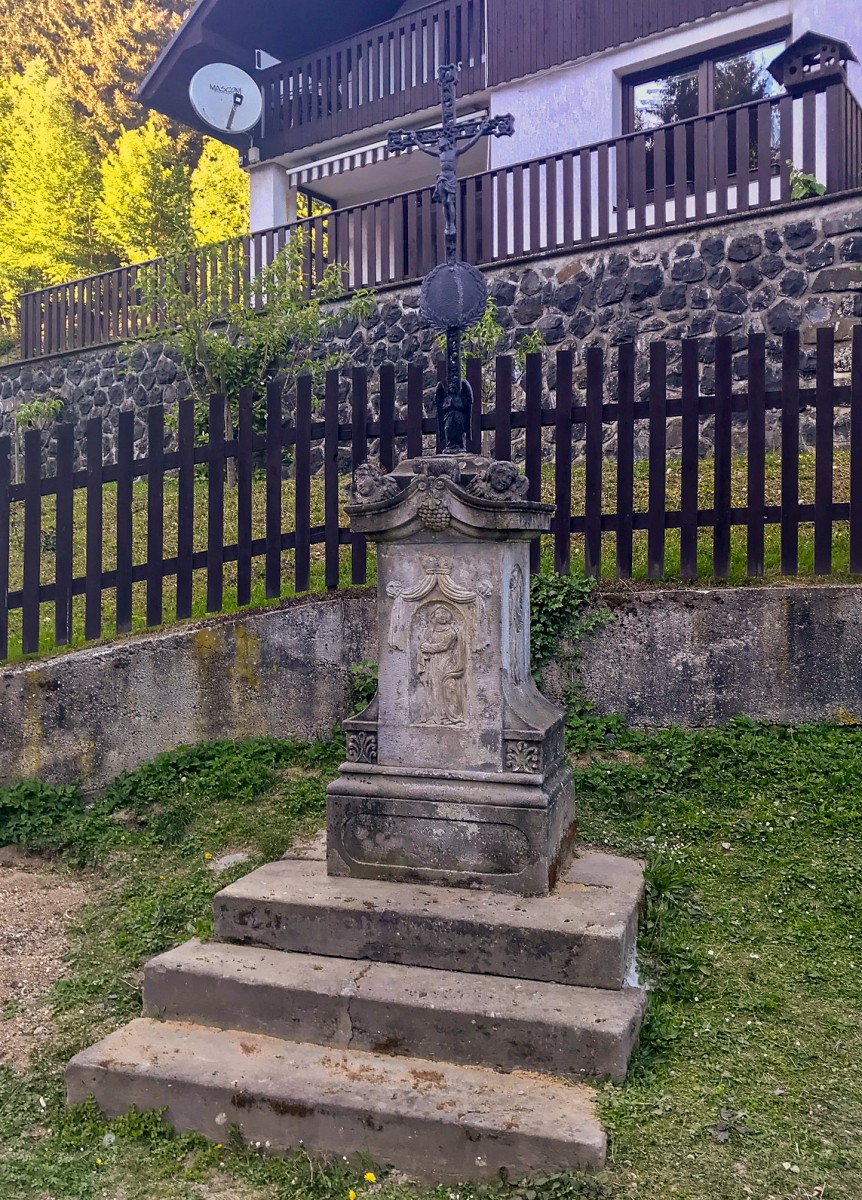
Among Líšný’s most valuable monuments are the sandstone Calvary sculpture group from the early 19th century, located near the train station; the Baroque chapel from 1777 in the Závrší area; and the cast-iron cross mounted on a stone pedestal featuring reliefs of the Virgin Mary, St. Anthony of Padua, and St. Joseph, which was erected in 1842 in the Záblatí area.
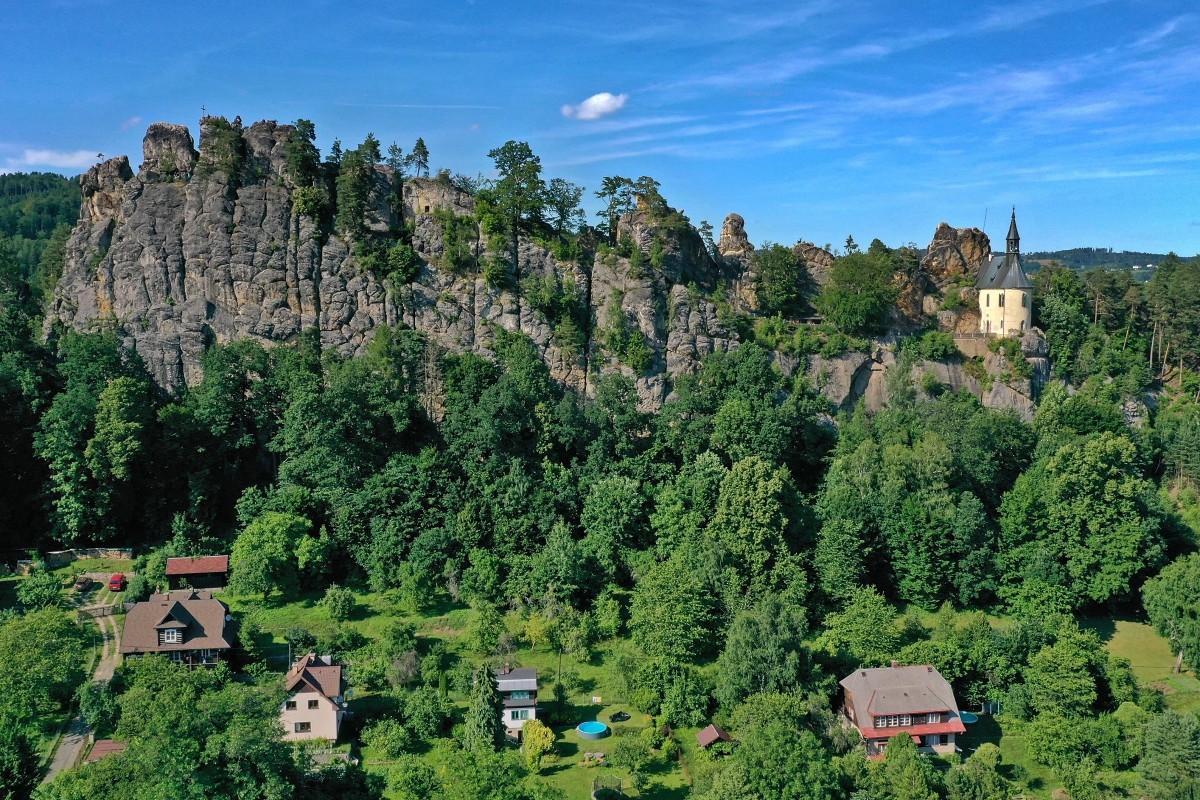
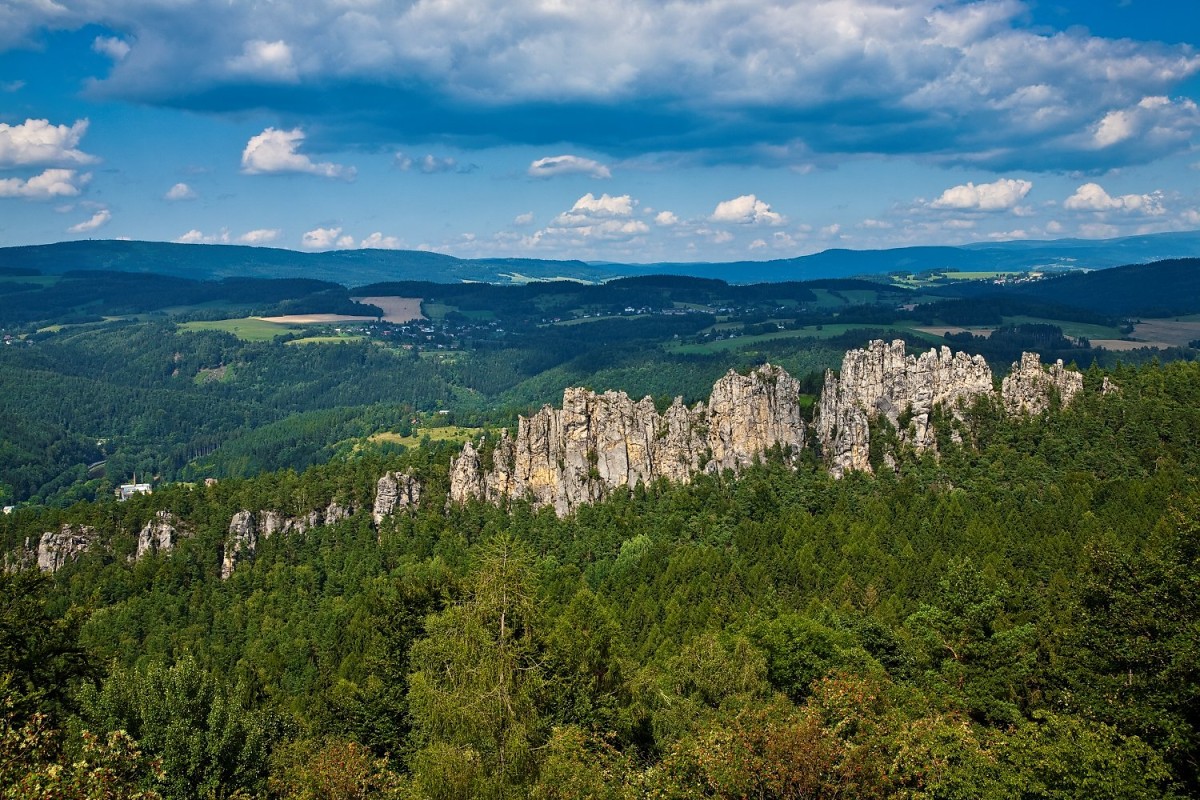
Near the village lies Chocholouš Hill, rising 80 meters above the river, accessible via a yellow hiking trail, as well as the Suché skály National Natural Monument, whose northern “dragon silhouette” is clearly visible from the village. Líšný is also a good starting point for trips to Malá Skála, the castles of Frýdštejn, Zbirohy, and Vranov, the rock town near Besedice, Kozákov, and the lookout towers on Kopanina, Hamštejn, or Černá Studnice.
Maloskalsko Nature Park
The village of Líšný is part of the Maloskalsko Nature Park, established in 1997, and since 2002 has also been part of the Bohemian Paradise Protected Landscape Area.
The Bohemian Paradise Protected Landscape Area was established in 1955 as the first of its kind in what was then Czechoslovakia. In 2005, Bohemian Paradise was included in the European Geoparks Network, and in 2015, the Bohemian Paradise Geopark became the only one in the Czech Republic to join the UNESCO Global Geoparks Network.
The Maloskalsko region is divided into seven landscape units: Sněhovsko, Drábovna and Frýdštejnsko, Zbirohy and Sokol, the Vranov and Koberov ridges, Vrátsko and Líšný, Těpeřsko, and the Jizera Valley.
The landscape of this area is characterized by scattered settlements, some with preserved log cabins, small copses, and high hills offering views of the surrounding countryside and the Jizera River valley, which forms the axis of the region. Here, the river meanders through a deep floodplain and crosses the second axis of the Pojizeří region—the Ještědsko-Kozákovský Ridge.
The nearby Suché skály and Vranovský hřeben are formed of 100-million-year-old sandstones, whose layers were tilted to an almost vertical position during orogenic processes. Suché skály, designated a national natural monument, together with the Vranovský hřeben and the Jizera River, form a truly unique Tertiary geological feature.
Líšný offers an excellent starting point for attractive excursions, such as to Suché skály, the Vranov Ridge, the Besedické skály with Sokol, Drábovna, Frýdštejn, or the more distant Kopanina lookout tower. The Greenway Jizera bike trail runs through the village, and the Golden Trail of Bohemian Paradise passes nearby.

Jizera Greenway
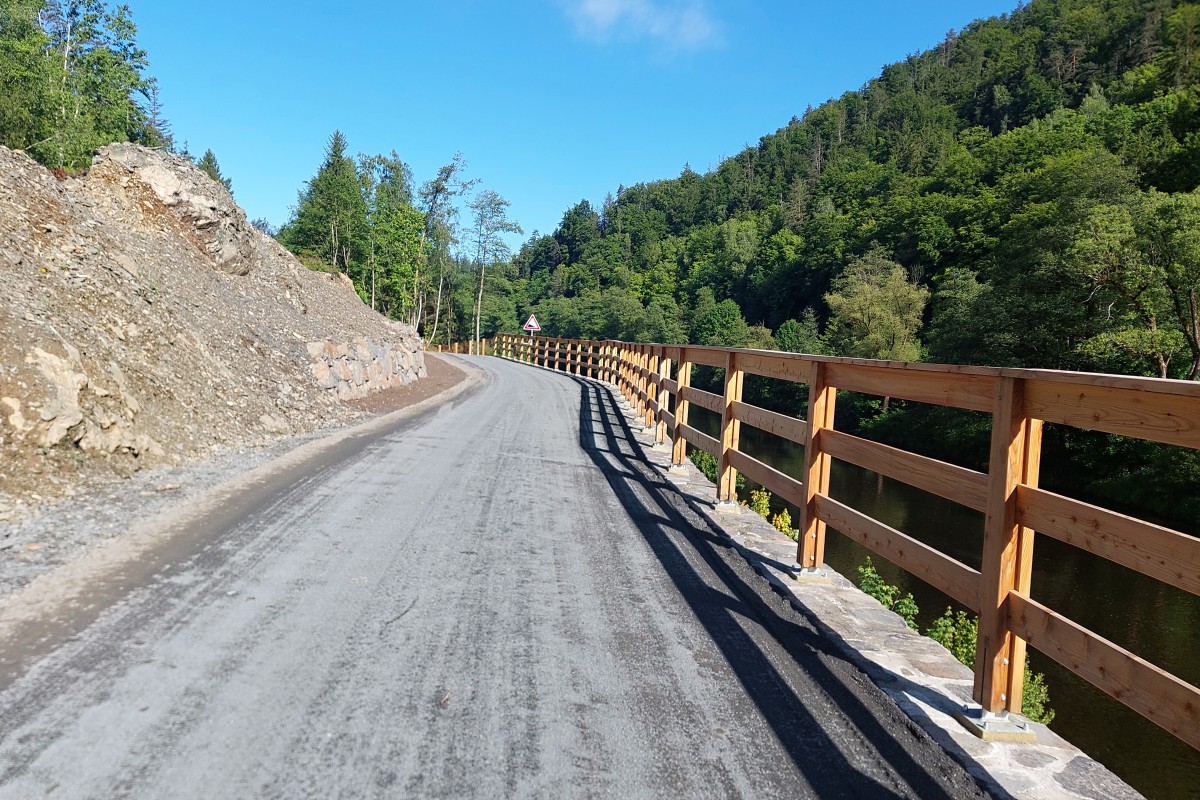
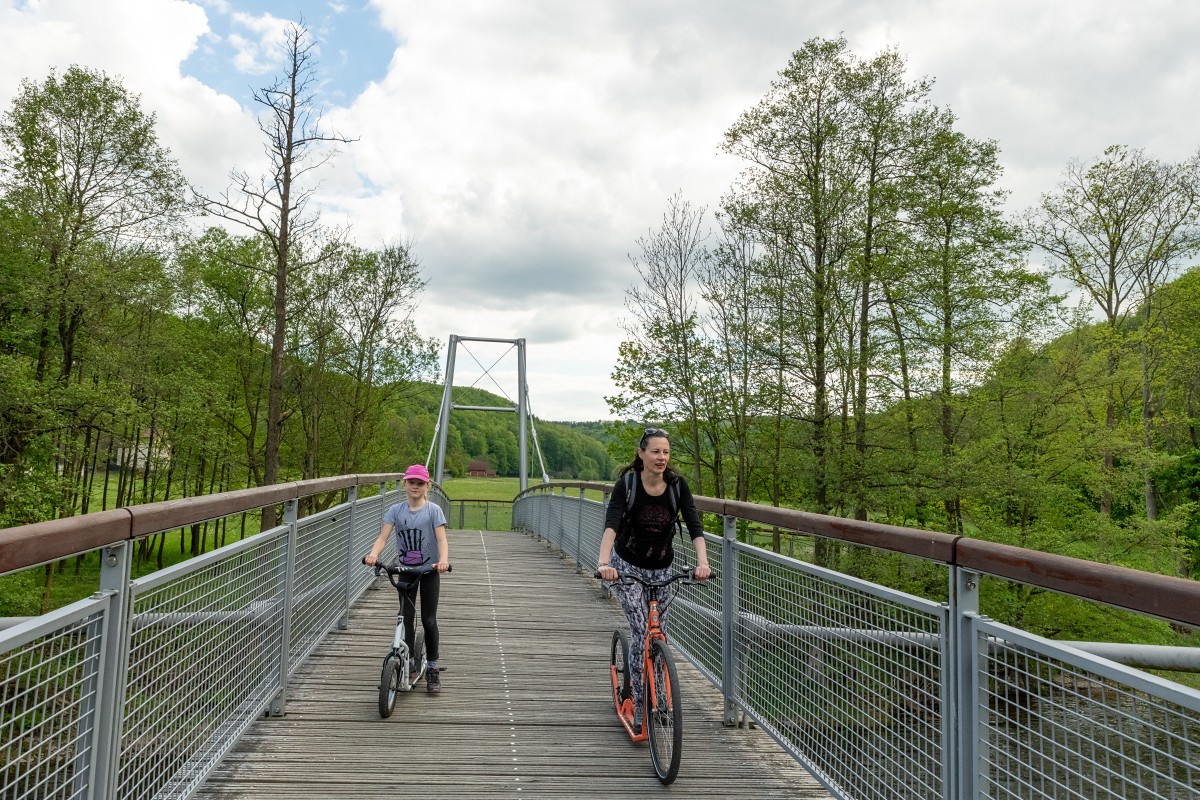
Marked cycling route No. 17, known as the Jizera Greenway, runs along the Jizera River. You can explore it by bike, on roller skates, or on a scooter; walk along it; or even paddle down certain sections by boat.
The Greenway Jizera takes you from the Polish border in the Jizera Mountains, through the foothills of the western Krkonoše Mountains, the Bohemian Paradise, and the Elbe River Valley all the way to Prague. You’ll ride along recently built sections, quiet roads, or unpaved paths. You’ll discover the charm of six distinctive landscapes, explore their natural landmarks, castles and chateaus, engineering marvels, and folk and religious architecture.
The most famous and most-visited section of the cycle route passes through the Maloskalsko region and the village of Líšný; here, it often takes the form of a separate cycle path and offers a combination of cycling (including popular scooters), water sports, and, of course, hiking. This section attracts between 150,000 and 180,000 visitors annually.
The newest section of the bike path between Líšný and Železný Brod was built between 2023 and 2025.