Slaná

The municipality of Slaná is situated in the picturesque valley of the Oleška River, which runs from Semily to the foot of Kozákov. The villages that make up the municipality are Bořkov, Nedvězí, Slaná, Sutice, Světlá and Hořensko.
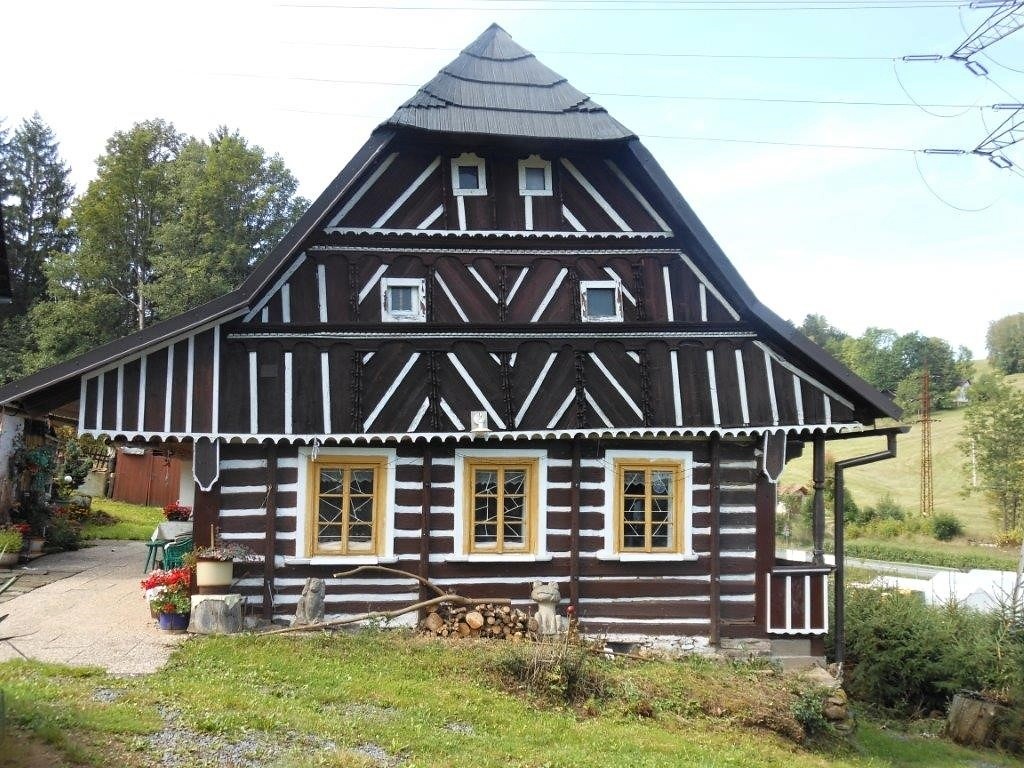
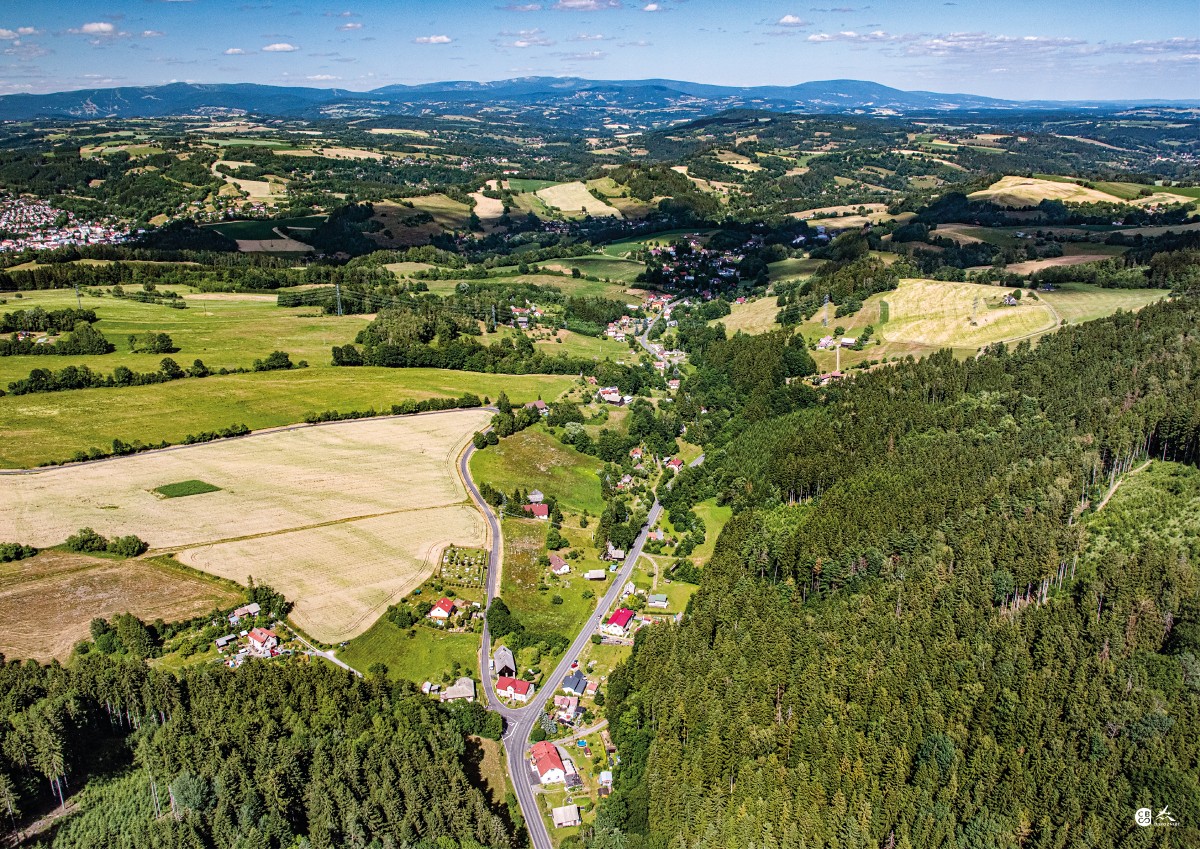
Nedvězí is the oldest. Its earliest preserved record dates back to 1316, when it belonged to the Lomnice estate. Slaná appears in the sources in 1430, while Bořkov is first mentioned in 1542 and belonged to the Semily estate. The village of Hořensko is the most recent, first mentioned in 1786. From the 1890s many local inhabitants earned their living through the mechanical cotton processing industry. One important enterprise was the Fryml Mill in Sutice, which was modified as needed to produce textiles or glass. Over the years these villages belonged to various owners, sometimes each to someone different. The villages were merged to form the present administrative unit in 1953, or 1960. In 1974 a cultural centre was built in the middle of the municipality, which provides space for the municipal office, associations, and civic services.
The surrounding hills offer vistas of the Bohemian Paradise with Valdštejn, Hrubá Skála and the ruins of Trosky castle. The view of part of the Giant Mountains is dominated by Kotel and Lysá hora. The blue footpath markers to Lomnice nad Popelkou and cycle route no. 4175, which links Slaná with the Bohemian Paradise and the Giant Mountains, lead through the village.
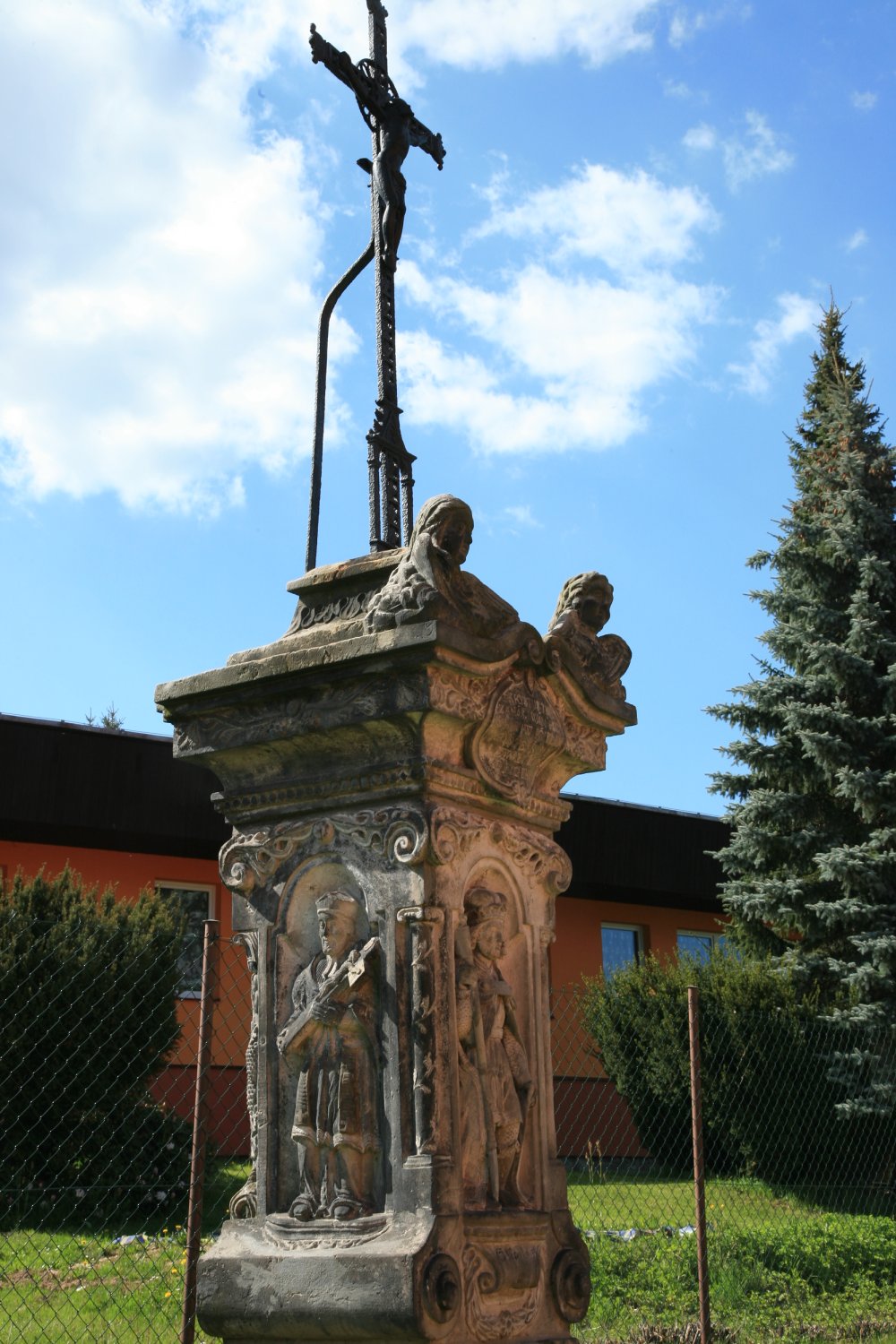
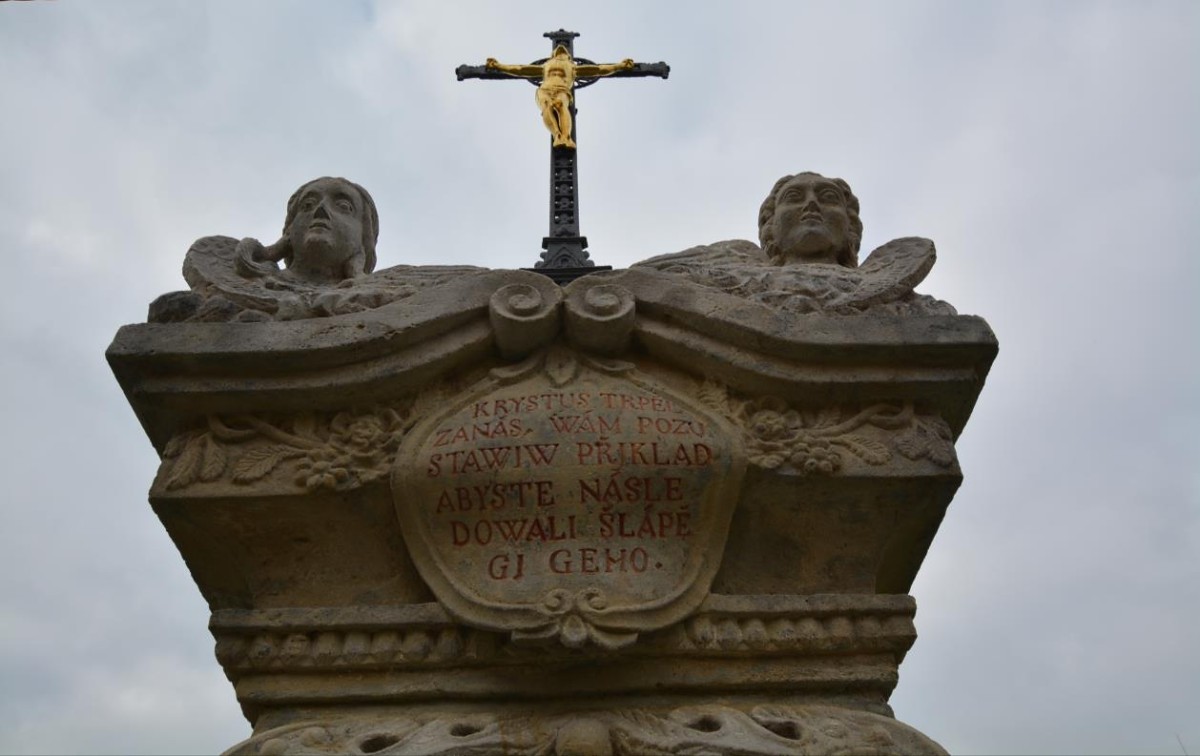
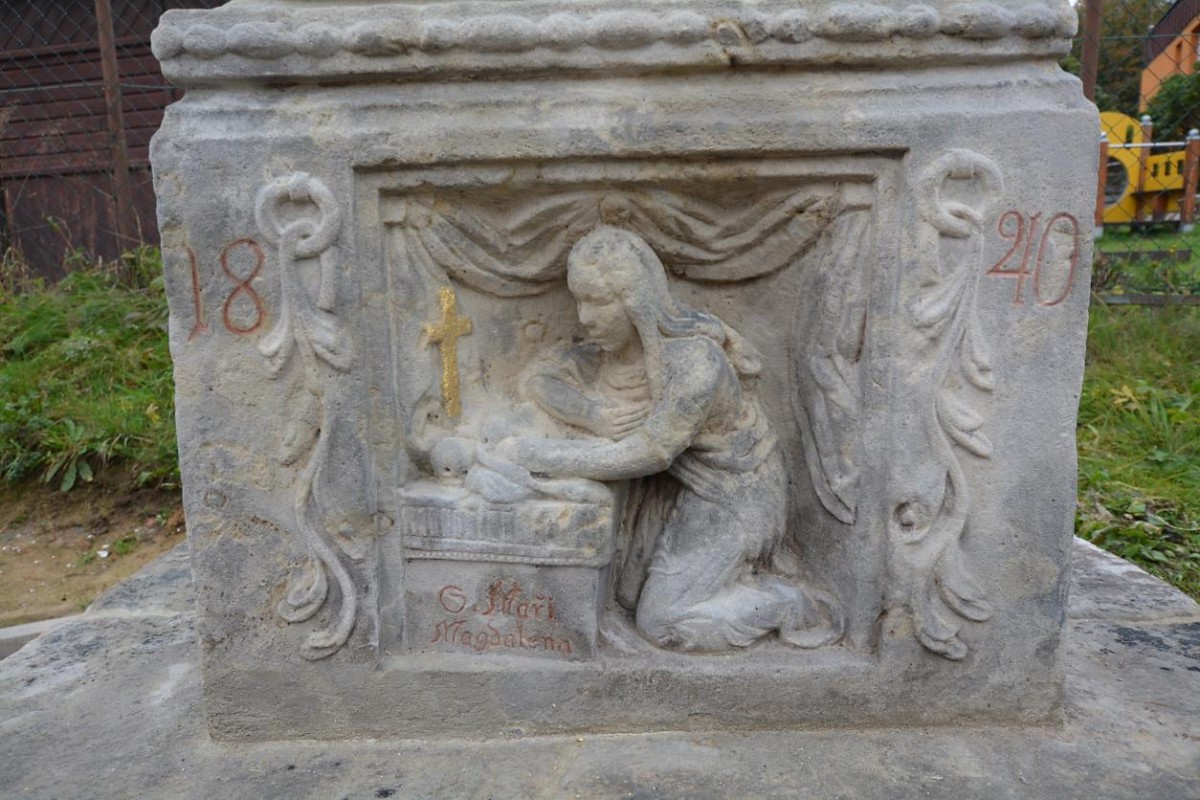
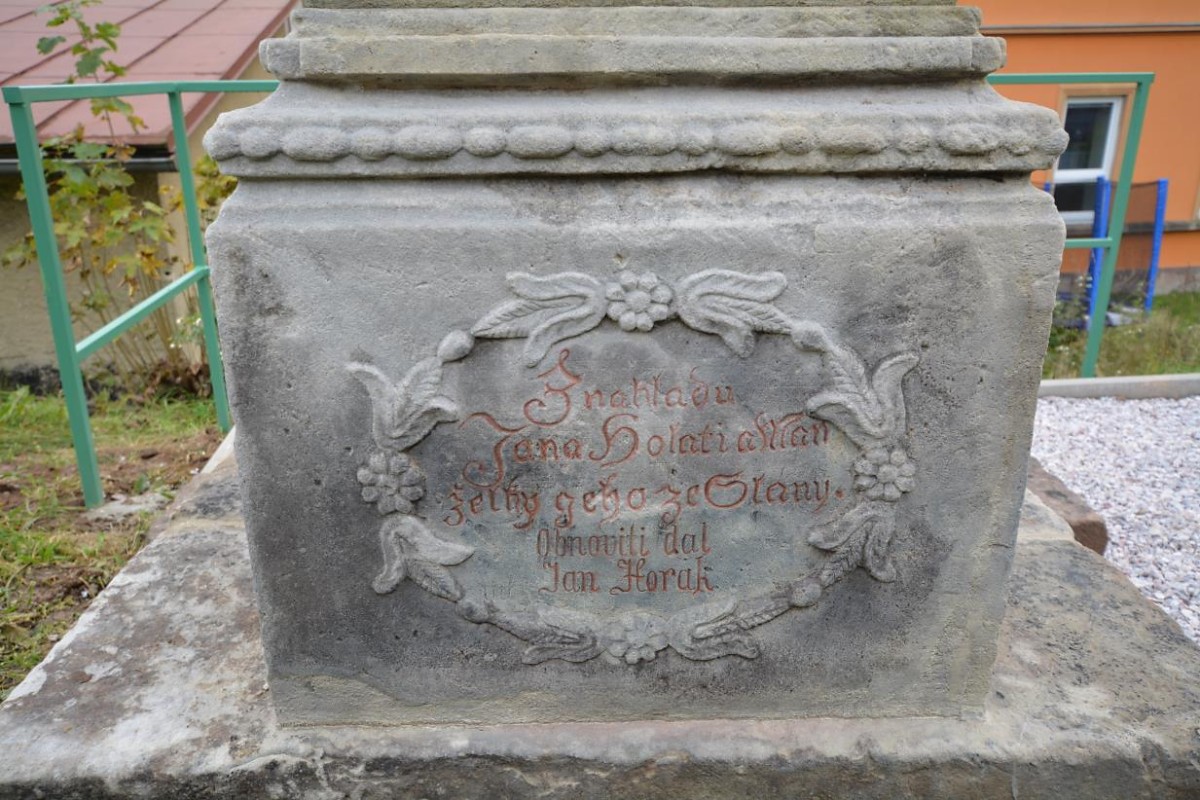
Slaná - Cast Iron Cross
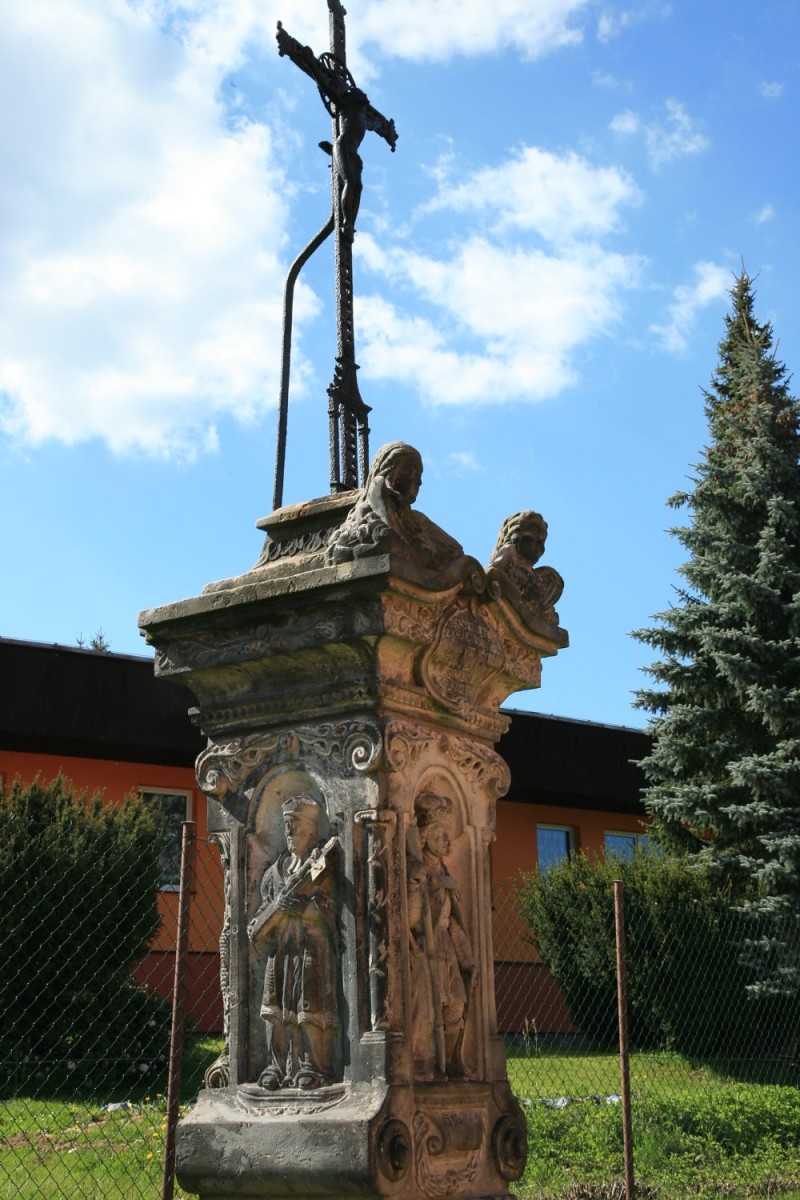
Litinový kříž s kamenným soklem ze šedého pískovce je dílem Jana Zemana ze Žernova a dal jej v roce 1833 zhotovit rolník a tkadlec Jan Holata.
Podstavec má na čelní straně výrazný plastický reliéf zobrazující sv. Máří Magdalénu v jeskyni. Zbývající strany soklu zdobí mělké nápisové kartuše. Dřík podstavce je při bočních stranách opatřen dvojicí volutových křídel a ve středních osách jednotlivých stěn ho zdobí reliéfy světců v mělkých nikách (sv. Václav, sv. Ignác z Loyoly, sv. Jan Nepomucký a svatí Jáchym, Anna a Marie).
Římsa s čelní nápisovou kartuší a hlavičkami andělů po stranách nese litinový kříž, zdobený neogotickým ornamentem.
Na zadní straně soklu se nachází původní rytý nápis „Z nakladu Jana Holati a manželky jeho ze Slany“, doplněný informací „Obnoviti dal Jan Horák“. V nápisových kartuších na soklu jsou pak vyrytá jména „sv. Jan Nepomucky“ a „sv. Ignacius“, v kartuši na římse nápis „KRYSTUS TRPEL ZA NAS, WAM POZUSTAWIW PŘIKLAD, ABYSTE NASLEDOWALI SLAPĚGI GEHO“ a letopočet 1840, kdy byl podstavec dokončen.
Ve Slané dříve stávala i kaple sv. Rozálie, kterou postavil roku 1819 František Jirounek. Bohužel byla v polovině 20. století zbourána.
V obci se nacházejí také zachovalé ukázky podkrkonošského lidového stavitelství. Příkladem je památná chalupa se stodolou čp. 43 ve Slané z 18. století. Jedná se o roubené přízemní stavení na obdélném půdorysu, které má při bočním průčelí bedněnou pavlač s vyřezávanými sloupky a celé je zakryto sedlovou střechou. Jelikož jsou však interiéry roubených chalup v Pojizeří turistům většinou nepřístupné, mohou nám o bydlení a životě našich předků mnohé napovědět národopisné expozice regionálních muzeí.
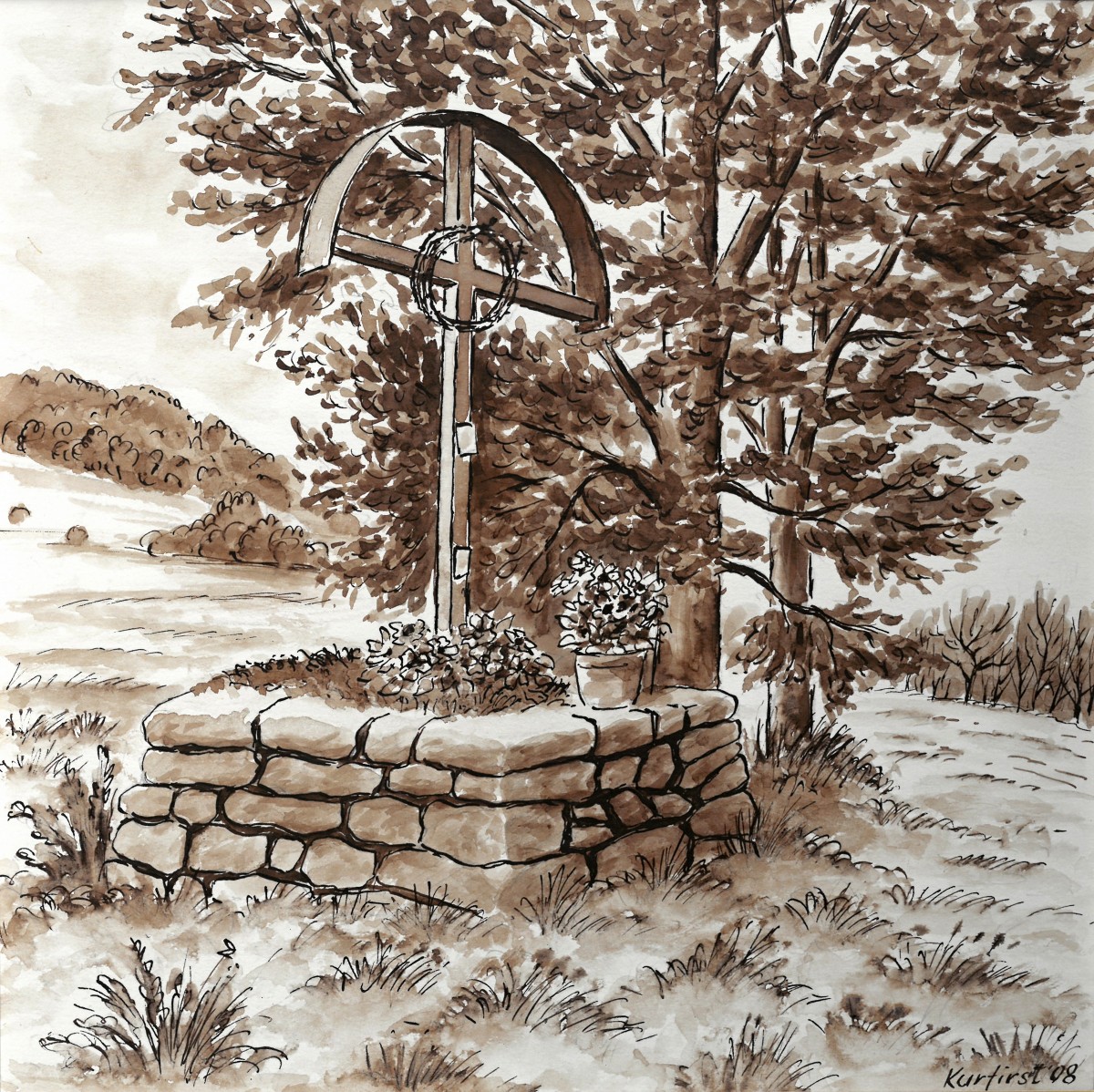
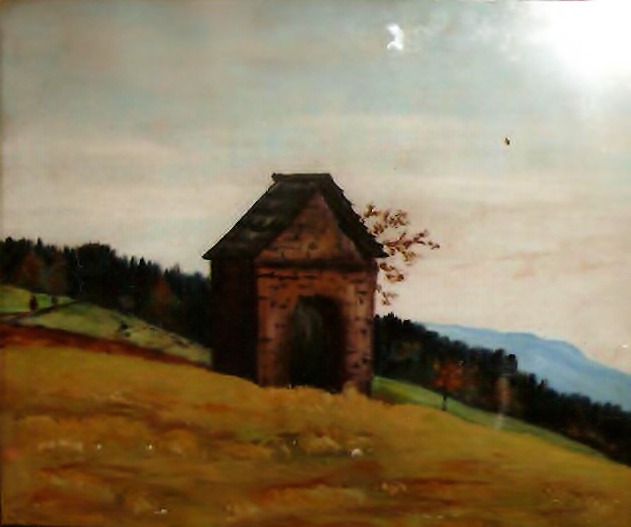
Slaná – Saint Rosalia
The emblem of the municipality of Slaná depicts a green hillock with a blue border, which is covered with five-petaled silver roses. The same wreath of roses can also be found on the municipal flag. Why? In 1819 a chapel was built in the municipality and consecrated to Saint Rosalia of Palermo, one of whose attributes is a wreath of white roses. The chapel became an important place in the life of the local people, and although it was demolished in the mid-20th century, the attribute of its patron lived on and found its way into the municipal symbols.
Saint Rosalia of Palermo was born in around 1130 to the Sinibaldi, a high-ranking family in Palermo. It seems that she even spent part of her life at the royal court. Soon, however, she entered a convent, but legend has it that she found her life too comfortable there, and so she decided to leave and live as a hermit. She settled in a cave near Palermo and died there in 1166.
Saint Rosalia is not only the patron saint of Palermo, but is especially important as a protector against infectious diseases. In 1624 the Great Plague broke out in Palermo and, according to legend, only died out after the grave of Saint Rosalia was discovered on a nearby hill and her remains were moved to the house in Palermo where they still lie today. The cult of the saint is particularly widespread in Italy, but also found its way to the Czech lands during the Baroque period. Several chapels were built here and consecrated to her. The chapel in Slaná was one of those.
Rosalia tends to be depicted as a young, comely woman with her hair uncovered. She usually wears a wreath of roses on her head, often white, or is shown with angels bringing her a wreath. She generally holds a cross in her hand and is accompanied by a death skull.
There are many legends about the life of Saint Rosalia, including one about a beautiful girl forced into marriage by her father against her will, and so she had to flee into a convent. Whether or not that really happened is something we'll probably never know, but the people of Slaná revered the patron saint, as proven by the symbol of the municipality to this day.